Why Nvidia and Microsoft hate Anthropic
Infra vendors' power struggle with model layer

Recently, there’s been a significant uptick in what seems like coordinated anti-Anthropic campaigns, dressed as either 1) pro-Open Source movement, or 2) pro-data intellectual property (IP) advocacy for enterprises. For example:
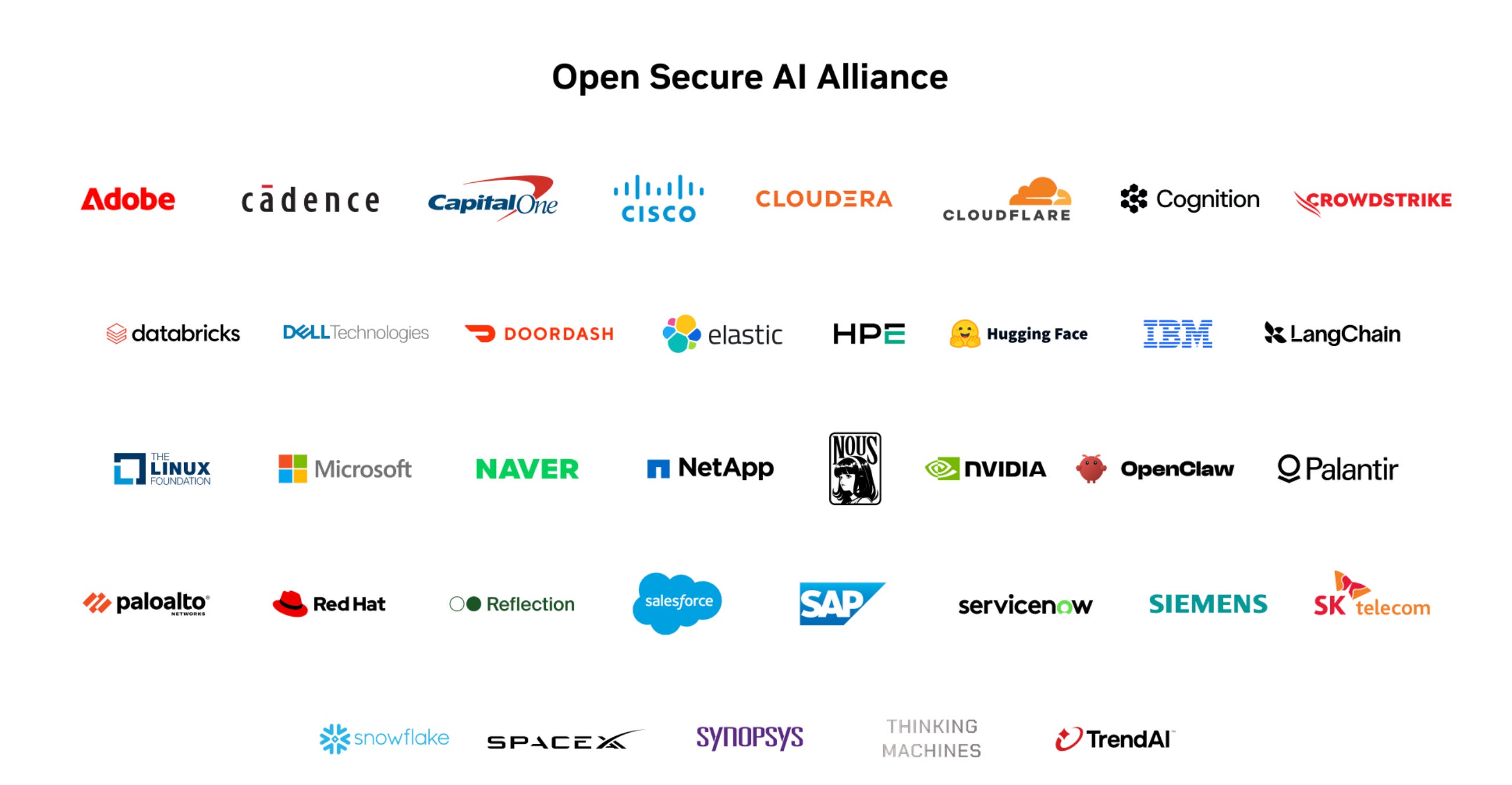
Nvidia just launched Open Secure AI Alliance that argues for unregulated use of open weight frontier AI models, including the Chinese ones accused of distilling Anthropic’s models. Interestingly, Nvidia claims that releasing AGI-grade open weight models in the wild fosters AI safety.
Relatedly, Satya Nadella wrote a series of Twitter essays on why enterprises should avoid working with Frontier AI models to protect their “data IP”, and train its own AI models by finetuning open weight models.
This growing rift among the U.S. AI ecosystem players is highly concerning, especially from the geopolitics angle. It creates dissent among American business leaders, which plays right into China’s hands.
But from a business perspective, it’s fascinating to inspect the motives of every player in this feud between “Nvidia-Microsoft-Application Software” and “Anthropic-Amazon-AMD-Google” camps. In some sense, this war between “frontier labs” versus “Nvidia-sphere” was inevitable, since they need to commoditize each other to survive (as we will see why).
And like it or not, how this feud resolves will impact the future shape of global AI ecosystem, as well as the AI capex spend, and ultimately all capital markets! So while I hate writing about trendy AI gossip, I’ll make an exception this time. I’ll also preface this post with a trigger warning, since “open weight AI” has become more polarizing than politics or Lionel Messi for some.
The right way to interpret the “Open Secure AI Alliance” war
Whenever “open source AI” topic is brought up, people take the cognitive shortcut of discussing ideology. Ideology is great for getting the masses on your side, and it’s the story. “Frontier models should be free” or “Enterprises should own all their data” are easy ideas to sell.
But let’s set squishy ideology aside for a sec and talk real incentives (money). There’s intense irony that Microsoft and Nvidia (whose core CUDA system is closed source and deeply coupled to hardware) are the ones screaming for open source. These incumbent companies have built their moats weaponizing proprietary code through and through, and embracing OSS only when it’s convenient.
So why do Nvidia and Microsoft feel the need to attack Anthropic? Simply put, Anthropic or OpenAI winning the Enterprise AI market will come at Nvidia and Microsoft’s expense. Same with most developer infra companies (e.g. Cloudflare, Thinking Machines), application layer ISVs (e.g. ServiceNow), or AI startups (e.g. Langchain) that co-signed Nvidia’s letter.
Who didn’t sign (yet)? Amazon and Google (both investors and major compute providers to Anthropic), AMD (which is working closely with Anthro and OAI to shape its server roadmap), Broadcom (that’s in the custom ASICs business, which Nvidia hates).
Let’s drill down a bit more.
If you are Jensen Huang, what’s your biggest fear? It’s a world where Anthropic wins enterprise AI, and becomes the largest customer of accelerated compute. That complicates the supplier-buyer relationship between the two, and hurts Nvidia’s pricing power. It’s been many years since Jensen Huang didn’t have an upper hand in supplier negotiations, so the two labs (Anthro and OAI) dominating all final demand for AI is not good for Nvidia’s gross margins.
Not only that, both Anthropic and OpenAI have been aggressively diversifying their compute suppliers by working AMD, Broadcom, etc. They basically refused to kiss Jensen’s ring. And as they should, since compute is the biggest expense for the labs and they need to drive down their COGs. But if the two labs that have 80%+ of enterprise AI market all trend toward not using Nvidia chips, then Nvidia is completely toast in the long run. Market has been pricing this for a while, which is why Nvidia’s stock hasn’t moved much for more than a year.
What Jensen Huang would rather have is a world where every enterprise reduces frontier model reliance, and runs open weights models on its own AI servers - or - uses compute from NeoClouds that Nvidia has financed (e.g. Nebius) - or - works with a hyperscaler that is Nvidia-friendly (definitely not Google).
Even better, a world where enterprises are finetuning or pretraining their own custom models is music to Jensen and Satya’s ears, because that just increases the demand for general purpose GPU compute like Nvidia. Fragmented demand from ten thousand enterprises preserves Nvidia's pricing power; concentrated demand from two sophisticated buyers with ASIC roadmaps destroys it.
Downstream from that, finetuning platform providers like Thinking Machines also want to steer customers away from Anthropic and OpenAI. It doesn’t matter whether a mid-market law firm really needs to train its own reasoning model or not. Everyone should train their own models, they say. Make customers believe that their firm has super valuable corpus that is completely out of distribution from what was already trained into Claude or Kimi. Jensen owns a stake in practically every neocloud, so the neoclouds’ incentives are aligned, too.
So here’s the punch line: open weight movement is great for dev infra business. It generates more activity and demand for a bunch of finetuning, inference, etc, workloads that otherwise wouldn’t exist if every enterprise just used a Claude CoWork subscription or GPT 5.6 API, which arguably is what most companies should be doing, especially for low volume workloads and factoring in the cost of hiring AI research teams.
From Microsoft’s perspective, every Claude Cowork license comes out of Co-Pilot’s TAM. And while Microsoft owns a minority stake in Anthropic and Azure does serve Claude models, Microsoft is most exposed in the application layer, and hence most vulnerable to outcome-based transition of software. So they need Azure to offset demand destruction in their SaaS business (which is working for Google). But Azure is not the preferred destination for Claude workloads.
In other words, if you are a shovel seller and you aren’t Anthropic or OpenAI, your company’s fate depends on the two U.S. labs not “winning”. What’s interesting is, much is talked about “vendor lock-in” to Claude or GPT models, but no one’s talking about vendor lock-in to Azure Foundry platform, Cloudflare, or even Thinking Machines, etc. Customers should be aware that migrating workloads away from one lab means just pushing down vendor lock-in to a different layer (model → inference), since most customers aren’t going to run their own GPU clusters on-prem.
But it’s not just developer infra, Microsoft, and Nvidia that want Anthropic to stumble, but most application software companies as well, such as ServiceNow or DoorDash, which also signed the letter. Getting Fable-grade AI model without having to spend R&D is, needless to say, great for them. The fact that the models are made by the Chinese labs could be a bit awkward, but also great because they outsourced the potential mess of distillation work.
To be fair, this “hard incentives lens” cuts against Anthropic just as hard. When Anthropic warns about the Chinese labs’ distillation attacks or the security risk of open weights beyond some capability threshold, it’s also talking its book: every enterprise that gets scared off Kimi served off of Baseten is a customer with one less BATNA in its next Claude contract negotiation. Nobody in this fight is a neutral party. The question isn’t who’s talking their book — everyone is — it’s whose book happens to be aligned with outcomes you care about.
In any case, this is all just a war for AI workloads. There’s only a finite amount of AI TAM, at the end of the day, especially if Jevons paradox doesn’t hold forever. If the labs win everything, the non-lab alliance loses. And vice versa.
From China’s perspective, having a divided rival is obviously great, so they are in a happy pseudo-partnership with Nvidia. DeepSeek’s models are trained on Nvidia GPUs, and many instances have been reported of Nvidia chip-smuggling operations into South East Asia, which might have been used to train Kimi models.
I’ll reserve a separate post to discuss China. But in a nutshell, weakening the U.S. frontier labs is necessary for China, and the best way to do that is by capping their pricing power by encouraging open-weight adoption. Even if China doesn’t make a dime off of this, they will benefit from slowing down Anthropic or OpenAI’s path to the next AI breakthrough.
From Nvidia’s perspective, the rise of Kimi, etc, has been helpful, in that it gives U.S. enterprise a reason to consider buying tokens from companies other than Anthropic or OpenAI, which Nvidia already owns or supplies to. And needless to say, having the official green light to sell Nvidia GPUs to China is a great short term boost to Nvidia.
Having compute superiority is basically the only reason why U.S. is leading the AI race over its rivals. It’s not obvious whether Nvidia is thinking things through from that angle. Compute superiority is the entire US lead, and Nvidia’s hedge amounts to monetizing that lead into the hands of the biggest rival.